Trying to choose between Portland’s eastside and westside? You are not alone. A lot of buyers start with that question because it feels simple, but once you look closer, Portland gets more nuanced fast. The good news is that you do not need a perfect label. You just need a home base that fits how you actually live, commute, and spend your time. Let’s dive in.
Eastside vs Westside Basics
The Willamette River splits Portland into east and west, and Burnside divides north and south. That makes the eastside versus westside comparison useful at first, but it is only a starting point.
Portland has more than 90 formally recognized neighborhoods, and both sides include dense urban districts, historic residential areas, and quieter pockets. In other words, picking a side of the river is less important than narrowing in on the right sub-neighborhood.
What the Eastside Usually Feels Like
When buyers talk about the eastside, they often mean places like Central Eastside, Buckman, Hawthorne, Division/Clinton, Sellwood-Moreland, Brooklyn, Ladd’s Addition, and areas near Mount Tabor. These neighborhoods are often associated with older homes, walkable commercial streets, and a strong neighborhood feel.
On the city side, Portland describes several eastside neighborhoods as some of the oldest in the city. Brooklyn is one of Portland’s oldest eastside neighborhoods, Buckman is identified as the first eastside neighborhood, and Rose City Park was platted in 1907. Sellwood-Moreland is noted for being walkable, tree-lined, and full of historic homes.
The eastside also is not one thing. Central Eastside brings in a different layer with older industrial buildings, rail lines, and adaptive-reuse energy. That mix is part of why the eastside often appeals to buyers who want character, older housing stock, and neighborhood retail corridors that feel woven into daily life.
What the Westside Usually Feels Like
The westside often brings a broader mix of urban, mixed-use, and greener hillside settings. Buyers usually think of Downtown, the Pearl District, Goose Hollow, South Portland and South Waterfront, Northwest Portland and Nob Hill, Washington Park, Multnomah Village, and the West Hills.
Housing on the westside varies quite a bit. Portland describes the Pearl District as a young, mixed-use neighborhood, while Goose Hollow includes both historic buildings and newer condos. Northwest Portland stretches from more central city blocks to areas connected to Forest Park and the West Hills.
Some westside areas feel distinctly more wooded or park-oriented. Portland’s tree canopy map shows more canopy west of the Willamette than east of it, which helps explain why the westside often reads as greener, especially near the hills and larger park areas.
Housing Stock: Older Homes or Mixed-Use Living?
If housing style matters to you, this may be one of the clearest decision points.
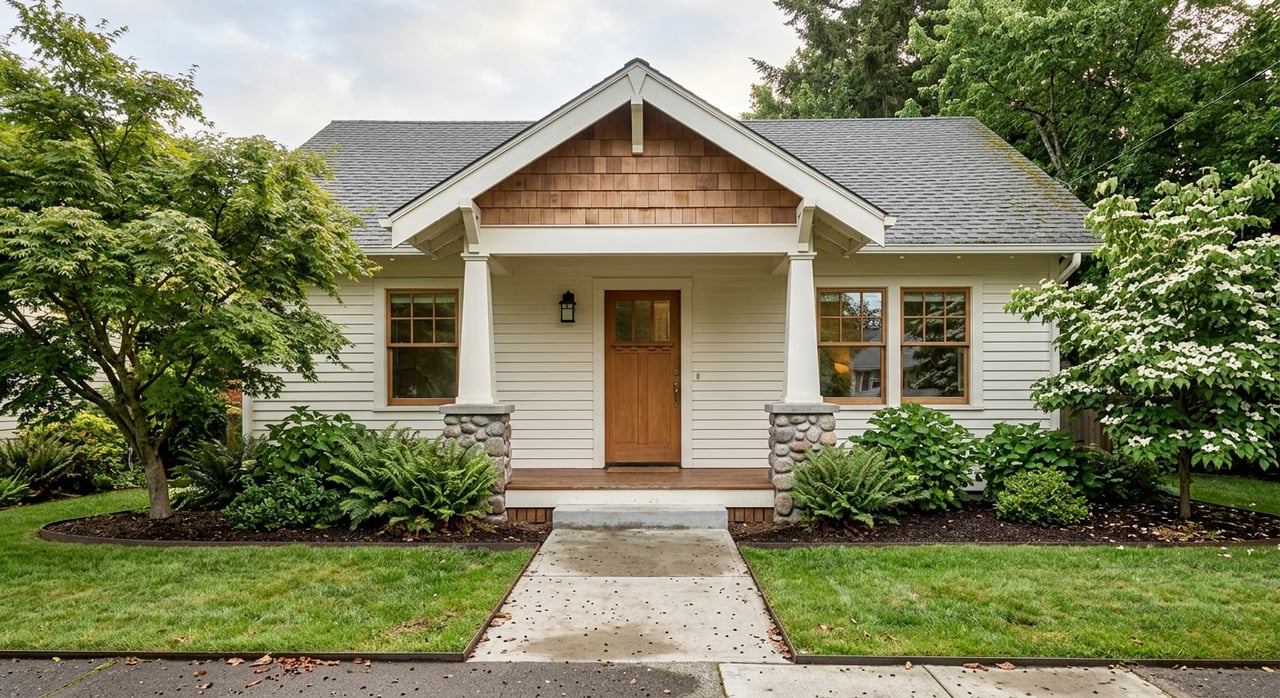
On the eastside, many close-in neighborhoods lean older and more residential. Single-dwelling zoning remains the most prominent land use type in the Inner Eastside, and many buyers are drawn to classic Portland homes, established streets, and blocks that feel more residential than high-rise.
On the westside, the mix can be broader. You may find central-city condos, mixed-use redevelopment, historic buildings, village-style pockets, and hillside homes that feel more tucked away. If you want newer condo inventory or a more urban mixed-use environment, more westside areas may fit that goal.
A simple way to frame it is this:
- Eastside often fits buyers looking for historic texture, older homes, and neighborhood commercial streets
- Westside often fits buyers looking for downtown-adjacent living, park access, or hillside and village-style pockets
Commute: Think in Corridors, Not Sides
A lot of buyers assume the eastside versus westside choice is mostly about crossing the river. In practice, your daily routine matters more than the label.
TriMet runs buses, light rail, commuter rail, and paratransit across the region. Portland Streetcar operates three lines in the central city, and the A and B loops connect both sides through the Pearl District, Broadway Bridge, Lloyd, OMSI, Tilikum Crossing, and Portland State University.
If you are focused on inner Southeast or Central Eastside, river crossing can be part of a normal daily pattern. The Central Eastside is easy to reach by streetcar, and the Eastbank Esplanade gives pedestrians and cyclists a riverfront route between the Hawthorne and Steel bridges.
If you work near Downtown, South Waterfront, or OHSU, the westside may offer a more direct routine. The Portland Aerial Tram connects South Waterfront and Marquam Hill, and OHSU notes that Marquam Hill, South Waterfront, and downtown are each less than a mile apart, with transit and bike options supporting movement between them.
Instead of asking, “Am I an eastside person or a westside person?” ask:
- Which route will you use most days?
- Will you rely on bridge access?
- Do you want streetcar or MAX nearby?
- Are you trying to stay close to a specific work hub?
- Do you walk, bike, drive, or mix all three?
That framework usually leads to a better answer than the river alone.
Price: The River Does Not Set the Budget
One of the biggest mistakes buyers make is assuming one side is always more expensive. The current numbers do not support that.
As of Zillow’s April 30, 2026 Portland snapshot, the city’s typical home value was $538,687, down 0.9% year over year. At that time, there were 2,316 homes for sale, and the median time to pending was 10 days.
Once you zoom in, the range gets wider. Here is a quick look at several illustrative ZIP codes.
| Area ZIP | Side | Typical Value | Homes for Sale | Year-over-Year |
|---|---|---|---|---|
| 97214 | Eastside | $688,807 | 44 | +2.2% |
| 97202 | Eastside | $637,999 | 84 | Flat |
| 97206 | Eastside | $472,818 | 123 | -0.8% |
| 97201 | Westside | $440,381 | 134 | -4.9% |
| 97205 | Westside | $495,759 | 36 | +1.0% |
| 97221 | Westside | $773,772 | 47 | -0.5% |
The takeaway is clear: eastside and westside are not price categories. A west hills ZIP can be more expensive than a close-in eastside area, while downtown-adjacent westside options or parts of the outer eastside can come in lower.
That is why your budget conversation should start with a few target neighborhoods or ZIPs, not just one side of the river.
How To Choose Your Best Home Base
If you are deciding between east and west, it helps to focus on the parts of daily life that shape your experience the most.
Start with your home style
Think about whether you are drawn to historic homes, established residential streets, and older neighborhood fabric. If yes, many eastside areas may rise to the top.
If you prefer a broader mix that could include condos, mixed-use buildings, hillside settings, or denser central-city options, the westside may give you more of what you want.
Map your weekly routine
Your real home base is not just where you sleep. It is where you can easily get to work, run errands, meet friends, and enjoy your usual weekend spots.
Look at where you need to be most often. A home that looks great on paper can feel less convenient if your usual route depends on a commute pattern that does not fit you well.
Decide what kind of neighborhood energy fits you
Some buyers want commercial corridors integrated into neighborhood life. Eastside districts like Hawthorne, Division, and Central Eastside are often part of that conversation.
Others want access to downtown anchors, mixed-use neighborhoods, major parks, hillside greenery, or village-style pockets. In those cases, parts of the westside may make more sense.
Use east and west as filters only
This is the step that saves people the most time. Eastside and westside are helpful search filters, but they are not final answers.
Once you identify the lifestyle, housing type, and commute pattern you want, the right fit usually becomes much more specific. That might mean comparing Sellwood-Moreland to Multnomah Village, or Buckman to Goose Hollow, rather than treating half the city as one choice.
A Simple Buyer Checklist
If you want to narrow things down quickly, use this checklist before you tour homes:
- Choose the top 2 to 4 neighborhoods that fit your commute
- Decide whether you prefer older homes, condos, or a mixed housing environment
- Set a realistic price range based on neighborhood-level inventory
- Note whether walkable retail streets or park and hillside access matter more to you
- Identify which transit options you would actually use
- Tour both sides if you are unsure, because Portland’s micro-markets can feel very different in person
The Real Answer Is Usually More Local
The best Portland home base is rarely “eastside” or “westside” in a broad sense. It is usually a specific neighborhood, pocket, or even a few blocks that line up with your budget, housing style, and day-to-day routine.
That local nuance is where smart decisions happen. If you want help comparing Portland neighborhoods in a way that matches your goals, budget, and commute, connect with Casey Hilton for a clear, strategic buying plan.
FAQs
Is Portland eastside or westside better for buying an older home?
- In general, many close-in eastside neighborhoods are more associated with older homes, historic texture, and established residential streets.
Is Portland westside always more expensive than eastside?
- No. The current ZIP-level snapshot shows price ranges on both sides, with some westside areas priced above inner eastside areas and others priced below them.
Is commuting easier from Portland eastside or westside?
- It depends on your route, work hub, and transit habits. Inner eastside areas can work well for bridge and streetcar access, while westside areas can be convenient for Downtown, South Waterfront, and OHSU.
Which Portland neighborhoods are usually considered eastside?
- Common examples include Central Eastside, Buckman, Hawthorne, Division/Clinton, Sellwood-Moreland, Brooklyn, Ladd’s Addition, and areas near Mount Tabor.
Which Portland neighborhoods are usually considered westside?
- Common examples include Downtown, the Pearl District, Goose Hollow, South Waterfront, Northwest Portland, Washington Park, Multnomah Village, and the West Hills.
How should you choose between Portland eastside and westside?
- Start with your commute, preferred housing stock, budget, and daily routine, then compare specific neighborhoods instead of treating each side of the river as one uniform market.